NEXT Lab

NEXT Lab

Next Generation Computing and Sensing Lab

We build efficient systems for Generative AI models (LLM, VLM, ASR, Omini, VLA, Diffusion, etc.) inference and training, advance domain-specific architecture (DSA) design for scientific computing, and develop mixed-signal circuit solutions (analog, digital, and optics) for sensing systems.

About the PI

Tao Wei portrait

Prof. Tao Wei leads NEXT Lab. He began as an Assistant Professor at the University of Rhode Island in 2012, was promoted to Associate Professor in 2017, and to Full Professor in 2022. As of 2023, he serves as a Professor and Director of NEXT Lab, coordinates the Clemson Cadence Project, and holds an adjunct position at the University of Rhode Island.

His research is funded by NSF, ONR, NASA, and private industry partners, and he received the ONR YIP award in 2017.

A highlight is FastFlowLM Inc., an NSF-sponsored research effort and a NEXT Lab spinoff startup company focused on efficient LLM inference on dataflow chips, which later joined AMD and became ROCm/FastFlowLM. It is now a main AMD NPU inference engine serving the open-source community and customers. FastFlowLM achieved best-in-class performance across the evaluated models, and AMD recognized its potential by integrating the technology and team into their inference stack. AMD blog post.
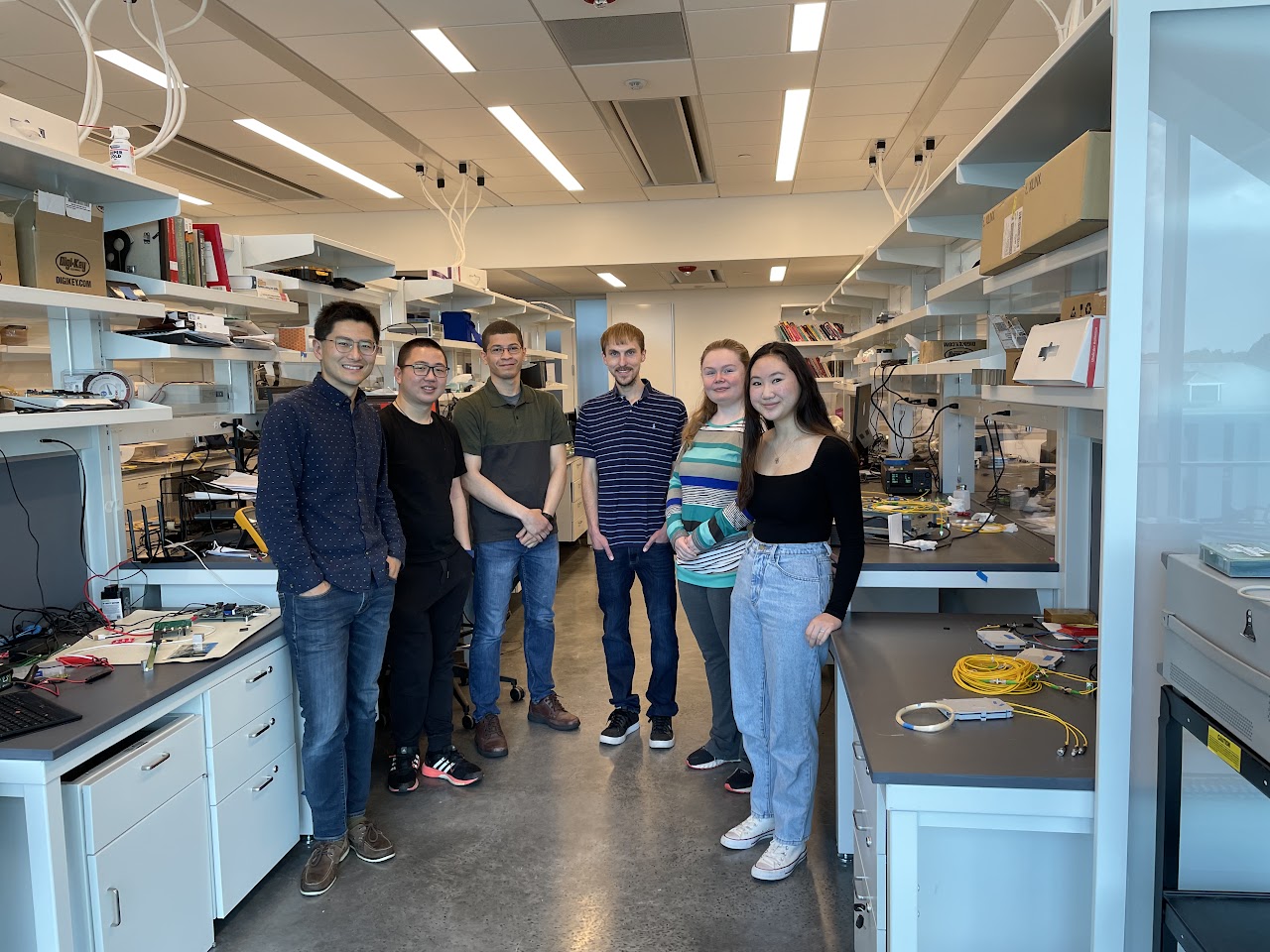
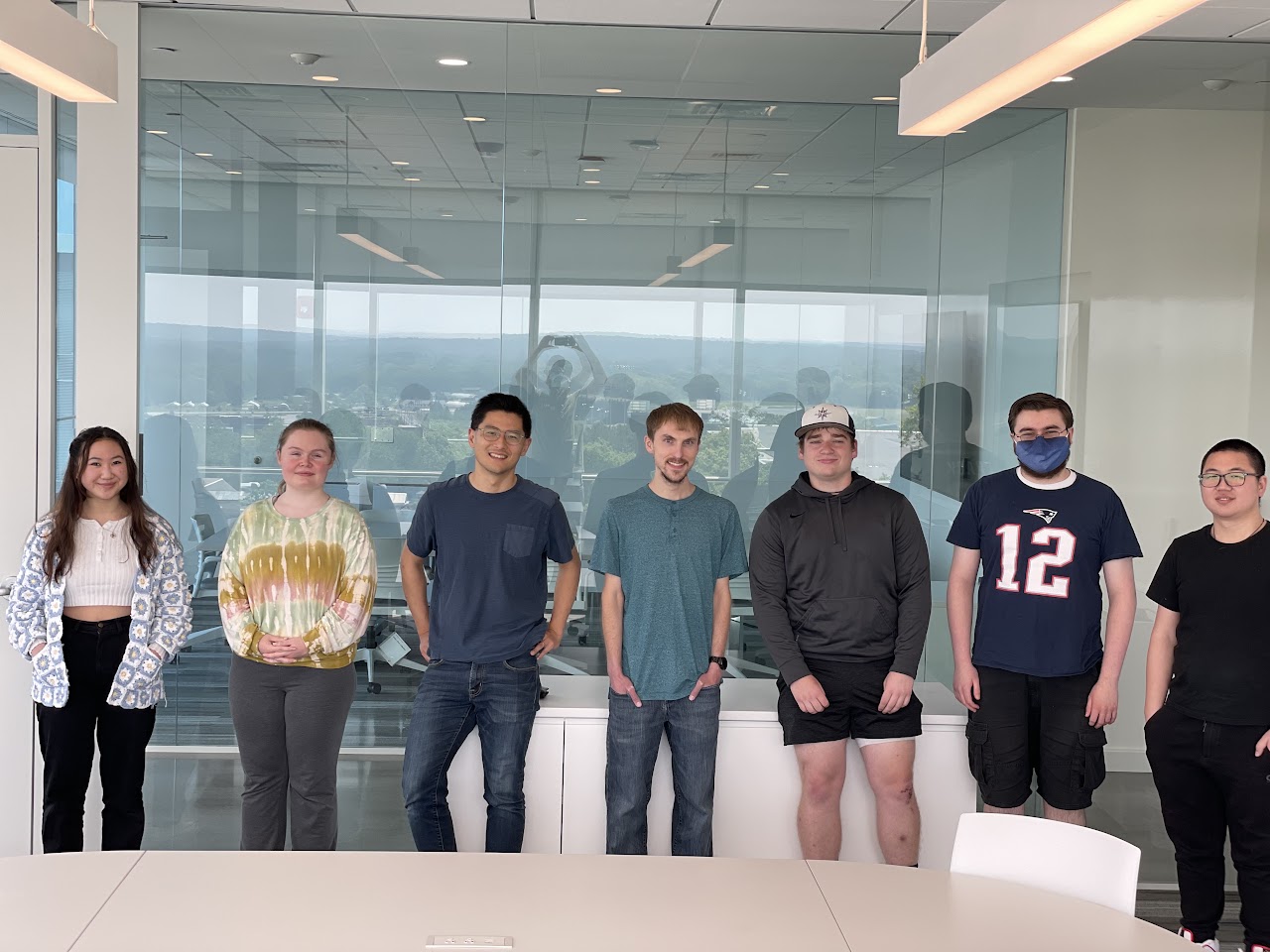
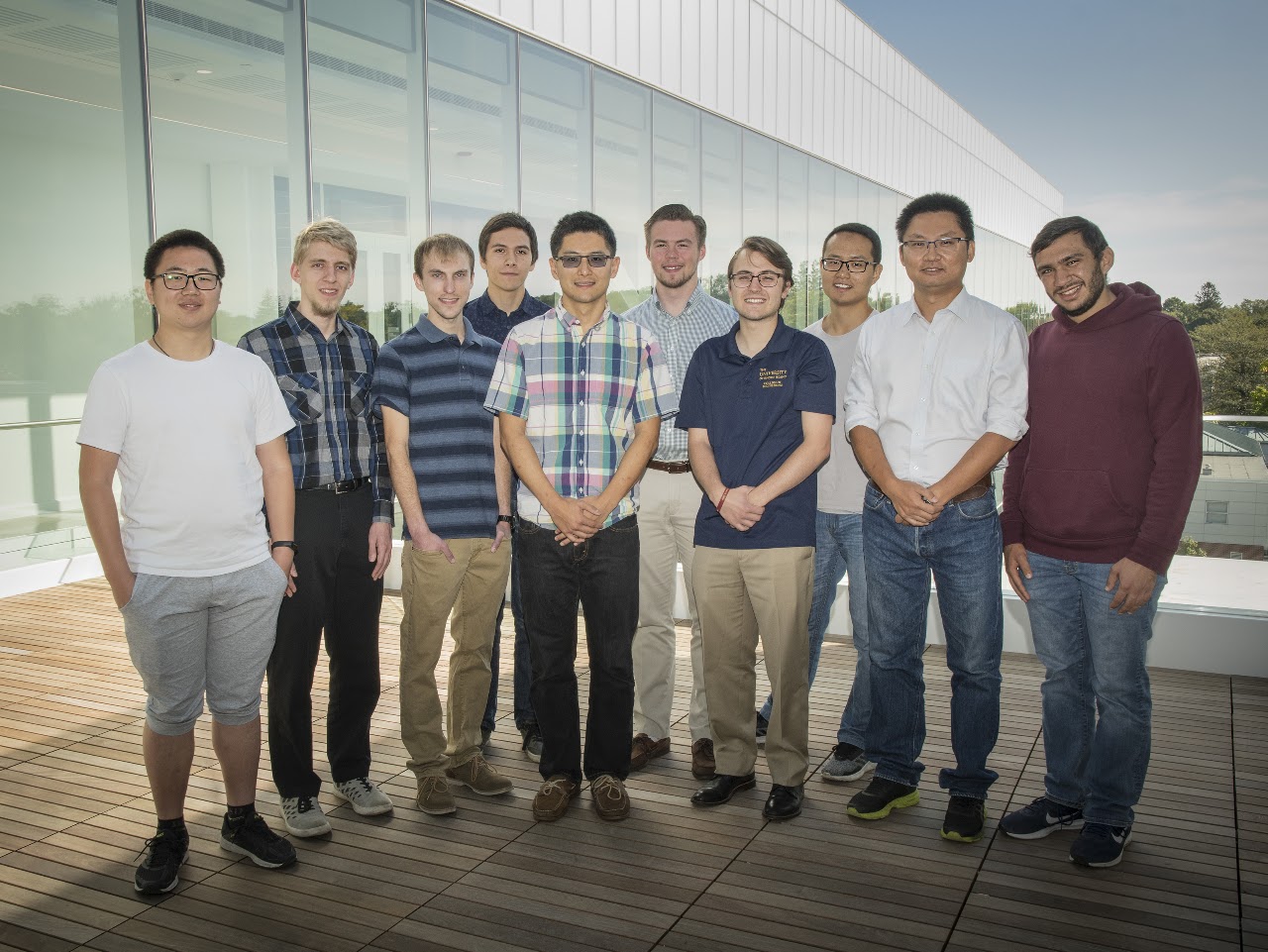
Life in the Lab

Research Interests

  • Efficient Systems for LLMs: End-to-end system design for efficient Generative AI models (LLM, VLM, ASR, Omini, VLA, Diffusion, etc.) inference and training, with emphasis on latency, throughput, memory efficiency, and deployment on resource-constrained platforms.
  • Domain-Specific Architecture (DSA) for Scientific Computing: Architecture and accelerator co-design for scientific workloads, including model-driven and optimization-centric computation.
  • Mixed-Signal Circuit Design for Sensing Systems: Analog, digital, and optical circuit/system design for sensor and sensing applications.

A Bit More

  • Interested in digital design? Try this self-paced tutorial: FPGA SoC HLS Instructions.
  • NEXT Lab worked with Cadence to train next-generation semiconductor engineers: Clemson Cadence Project.
  • Publication list and recent papers: Google Scholar Publications.
  • Representative publication venues include ACM/SIGDA FPGA, IEEE FCCM, FPL, ASAP, IEEE TIM, IEEE/OSA JLT, and IEEE JSTQE.
  • Students from NEXT Lab have interned or joined teams working across AI systems software, and end-to-end system design, and chip design.
  • Active collaborators include university labs and national lab teams, including DOE ANL collaborators, university partners, and external academic groups.
  • Research support includes projects funded by NSF, ONR, DOE, NASA, and industry collaborators.
  • Graduate application process: start with Graduate Admissions, then prepare a CV and research statement for follow-up discussion.
  • NEXT Lab is actively recruiting undergraduate and graduate researchers in reconfigurable computing and efficient Generative AI systems.

In the News

  • July 2027 Dr. Tao Wei is currently on leave, serving as an AMD fellow.
  • July 2026 FastFlowLM, a spinoff from NEXT Lab, joined AMD. Alfred (Zhenyu) Xu, Michelle (Miaoxiang) Yu, Shouyu Du, and Zane (Zhiheng) Ni joined AMD, and NEXT Lab PI Tao Wei joined AMD as a fellow. The project now continues as ROCm/FastFlowLM, supporting high-performance, high-accuracy generative AI models (LLM, VLM, ASR, Omini, VLA, Diffusion, etc.) for the community with fast day-0 enablement and strong agility on AMD NPUs.
  • December 2025 Teamed up with Dr. Jon Calhoun's Lab and Dr. Mathew Boyer's group, Dr. Peipei Zhou's Lab at Brown, and our collaborators (Kaz Yoshii, Antonino Miceli, and many others) at DOE ANL lab, NEXT Lab received DOE funds to work on edge ML accelerators.
  • November 2025 Andrew Ledbetter and Connor Bohannon presented their work with our DOE ANL collaborators at Supercomputing (SC25).
  • October 2025 FastFlowLM (FLM) project was integrated into AMD's Lemonade Server https://lemonade-server.ai/.
  • August 2025 Teamed up with Dr. Judson Ryckman's group and Dr. Andreas Breitenmoser's lab at OST, Switzerland, NEXT Lab received NSF funds to work on Fast and Scalable Framework for Next-Generation Very-Large-Scale Silicon Photonic Design.
  • June 2025 FastFlowLM (FLM) project (https://github.com/FastFlowLM/FastFlowLM) is online. A lightweight and efficient LLM inference engine optimized exclusively for AMD NPUs.
  • May 2025 Andrew Ledbetter and Connor Bohannon will begin their summer internships working with our collaborators at DOE ANL.
  • May 2025 Austin Hill and John Bolding will join the CI summer program to work with AMD engineers on evaluating a new AMD FPGA board.
  • May 2025 Alfred (Zhenyu) Xu delivered a talk at FCCM - Open Cloud Testbed Tutorial and User Workshop, Fayetteville, Arkansas.
    "A Stencil-Computing Architecture Achieving Linearly Scalable Performance on OCT"
  • May 2025 Teamed up with Dr. Judson Ryckman's group, NEXT Lab received NSF funds to work on accelerated optical resonator design and optimization through algorithm-HW co-design.
  • April 2025 Teamed up with many groups, NEXT Lab received a NVIDIA H200 cluster (8 machines in a pod; hosted on Palmetto Cluster) from CU-MRI program.
  • April 2025 The Clemson Cadence Project has had an exciting year! Three students accepted offers for Cadence's formal intern program in San Jose, two students received and accepted offers for Cadence's new college grad program. Congratulations!
  • April 2025 4 Ugrad students accepted summer internship offers from DOE ANL. Congratulations!
  • March 2025 Kazutomo Yoshi from DOE ANL visited NEXT Lab. Welcome!
  • March 2025 Tao Wei delivered a talk at Workshop on Domain-Specialized FPGAs, Monterey, CA, USA.
    "Leveraging FPGA Technology for Accelerating Analog Circuit Design in Power Electronics and Optics"
  • February 2025 Michelle (Miaoxiang) Yu presented her paper at ACM/SIGDA ISFPGA, Monterey, CA, USA.
    "Tile-Level Pipeline for Linear Scalable Stencil Computation on AMD AI Engines (Short Paper)"
  • February 2025 Qin Ling joined NEXT Lab as a Visiting student from JMU. Welcome!
  • January 2025 15 Ugrad students join NEXT Lab to work on Ugrad research via CI and honor thesis. Welcome!
  • January 2025 Dingjiang (Alan) Yan joined NEXT Lab as a Grad student. Welcome!
  • September 2024 Andrew O'Rourke joined NEXT Lab to work on an Ugrad honor project. Welcome!
  • September 2024 Teamed up with Dr. Ken Yang's group at URI, NEXT Lab received planning funds from NSF to work on an efficient long-sequence ML model through algorithm-HW co-design.
  • August 2024 Simon Walker successfully defended his thesis under the title of "PQC: Implementing MiRitH (MinRank in the Head) on FPGA". Congratulations!
  • August 2024 Matthew Jett, Charles Kowalski, and Samuel Bren joined NEXT Lab to work on Ugrad honor projects. Welcome!
  • August 2024 Zachary Moser joined NEXT Lab as a Grad student. Welcome!
  • August 2024 Shouyu Du joined NEXT Lab as a Grad student. Welcome!
  • August 2024 NEXT Lab received funding from ONR under the project name of "Time-efficient Machine Learning (ML)-aided Electric Design Automation (EDA) for Power Electronics Building Block".
  • July 2024 We presented a paper at the 35th IEEE International Conference on Application-specific Systems, Architectures and Processors (ASAP2024), Hong Kong.
    "TwinStep Network (TwNet): a Neuron-Centric Architecture Achieving Rapid Training, Zhenyu Xu, Miaoxiang Yu, Jillian Cai, Qing Yang and Tao Wei"
  • May 2024 The Clemson Cadence Project has had an exciting year! Six students accepted offers for Cadence's formal intern program in San Jose, three students received offers for Cadence's new college grad program, and three students accepted jobs with Cadence. Congratulations to everyone who got these coveted roles!
  • March 2024 Alfred (Zhenyu) Xu presented his paper at ACM/SIGDA ISFPGA, Monterey, CA, USA.
    "An FPGA-Enabled Framework for Rapid Automated Design of Photonic Integrated Circuits, Zhenyu Xu, Miaoxiang Yu, Jillian Cai, Saddam Gafsi, Judson Douglas Ryckman, Qing Yang, Tao Wei"
  • February 2024 Zhiheng (Zane) Ni joined NEXT Lab as a visiting Ugrad student from JMU, Xiamen, China. Welcome!
  • January 2024 Simon Walker joined NEXT Lab as a visiting Grad student from OST Rapperswil-Jona, Switzerland. Welcome!
  • December 2023 Kelsey (Yazhe) Zhang joined NEXT Lab as a Grad researcher. Welcome!
  • November 2023 Braeden Waugh joined NEXT Lab as an Ugrad researcher. Welcome!
  • November 2023 Dr. Tao Wei delivered an invited talk to the Savannah River National Lab (SRNL) AI Workshop.
  • November 2023 Alfred (Zhenyu) Xu presented his paper at IEEE Cluster 2023, Santa Fe, New Mexico, USA.
    "A Finite-Difference Time-Domain (FDTD) solver with linearly scalable performance in an FPGA cluster, Zhenyu Xu, Miaoxiang Yu, Jillian Cai, Qing Yang, and Tao Wei"
  • September 2023 NEXT Lab led the effort in the Cadence Night Event, which served to celebrate the university partnership with Cadence, the opening of the new Cadence Lab, and the kickoff for the Cadence Challenge.
  • September 2023 Dr. Tao Wei delivered an invited talk to the Amazon Wireless Summit 2023.
  • September 2023 Alfred (Zhenyu) Xu received the NSF Travel Grant for IEEE Cluster 2023. Congratulations!
  • July 2023 One paper was nominated for the Best Paper Award of the 34th IEEE International Conference on Application-specific Systems, Architectures and Processors (ASAP2023). Congratulations!
    "A Novel FPGA-Based Circuit Simulator for Accelerating Reinforcement Learning-Based Design of Power Converters, Zhenyu Xu, Miaoxiang Yu, Qing Yang, Yeonho Jeong, Jillian Cai, and Tao Wei"
  • June 2023 Dr. Tao Wei serves as the coordinator of the Clemson Cadence Project.
    Website: Clemson Cadence Project site
  • June 2023 NEXT Lab website is alive! NEXT Lab moved from the University of Rhode Island (Warmer Here!).

Join NEXT Lab

Undergraduate Researchers

We are actively recruiting undergraduate researchers in reconfigurable computing and AI systems.

Graduate Applicants

Start your application at Graduate Admissions: Apply Here.

For follow-up, prepare your CV and research interests for faculty review and discussion.